|
Hours: |
11am - 11pm EST 1pm-11pm Sat |
| Cell: |
919-614-4297 Cell |
|
eMail: |
Above is to send in orders and Q&A.
Below is My Paypal address |

Thank you for visiting Siebert Optics!
Serving Large Observatories and the
Amateur Astronomy Community alike.
200 Short Johnson Road
Clayton, NC
USA 27520
_______________________________
Products:


Eyepieces .965" / 1.25" / 2.0" / 2.7" / 3.0" / 4.0" / 4.3"
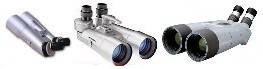
Large and Small Binocular Cleaning and Alignment services $99 Call or Email for details.
BT70 RA88 / Miyauchi / Kowa eyepieces

(Specialized Binoviewer services you can't get anywhere else)


Advanced Barlow Lenses including: Modular and 4 element Telecentric magnification multipliers


1.25" and 2" Advanced Binoviewers From $649-$1999


Binoviewer OCA's and Accessories
Adapters - Meade Scopes and ETX


Large and Small Non Illuminated and Illuminated Cross haired eyepieces.
Astrographs/Telescopes


Special binoviewer services and products you cant get anywhere else
Also can > Click here. And here.
ICP's Image Correction Prisms for Newts


Ladies Corner
Non-Astronomy Items
Binoviewer Correctors & OCA's and FLR's
We are the pioneers of this design.
Attention:
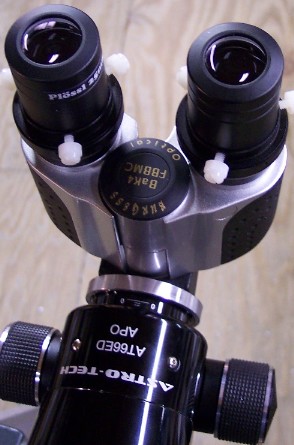
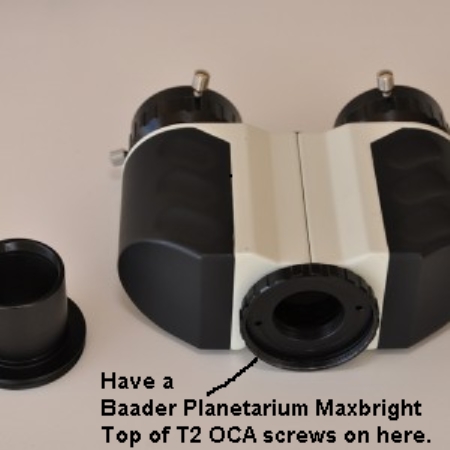
Always state the Binoviewer that you are going to use with your OCA. Indicating the telescope is important to. I will use this information to optimize the OCA for your system. I can also supply options to avoid any conflicts in equipment usage. The method of connecting your OCA to the bottom of your binoviewer may differ depending on your binoviewer Type. You may have a TV or Baader binoviewer and have a direct OCA to T-2 connection. This opens up the bottom of the binoviewer for greater illumination.Do you want to focus your WO/Burgess or Stellarvue binoviewer without an OCA on your Refractor! This includes the WO SD/Astrotech 66mm and Orion 80/100mm ED refractors. See ad #2 for details Click Here.
Supercharge your Baader, Burgess, SV, WO or similar binoviewer to work better with your Telescopes and save $$. See low power, easy focus solutions below in Ads #1 and #2.
Ad for all OCA's
#1a and #1b Performance low cost OCA's For all binos with 22mm or less Prisms.
#1C You Don't want any extra magnification? If you have a refractor this might be what you need.
#2 Discontinued.
#3 High Output Maxlight OCA's for big Prism Binos (24mm+prizms)(including BW-optics)
#4 Low Profile diagonal friendly OCA's (Very convenient and versatile.)
#5 SCT Multi Mag adaptors 1.25" and 2" (No focus help but gives extra magnifications to SCT/MCT.)
#6 Power Mag wheels for Dobs and Refractors (Quick Changing with limited focus swing.)
#6a Denk Power Switch Convertion 1.3x - 2.5x - 3.5x or 1x - 2x - 3x
#7 FLR's for Mak's and SCT's (Focal Length Reducers to reduce magnification.)
All of these can be found below with more Details.
----------------
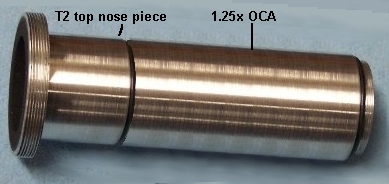
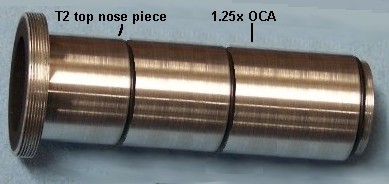
1.25" and 2" nosepieces for Telvue and Baader binoviewers with the T-2 connection.
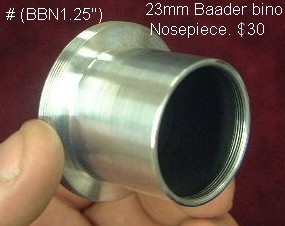 28mm
TV and Baader #(Ba23)1.25" T2 nose pieces Standard filter threads at
the bottom
$30
28mm
TV and Baader #(Ba23)1.25" T2 nose pieces Standard filter threads at
the bottom
$30
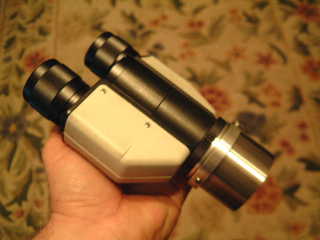 TV
and Baader #(2"Ba23) 2" T2 top nose pieces Standard filter threads at the
bottom $59
TV
and Baader #(2"Ba23) 2" T2 top nose pieces Standard filter threads at the
bottom $59
-------------------
|
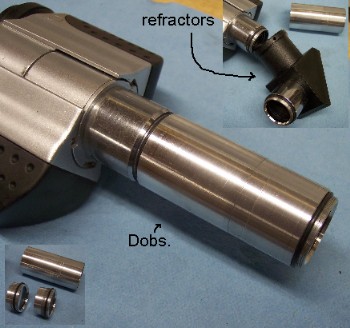
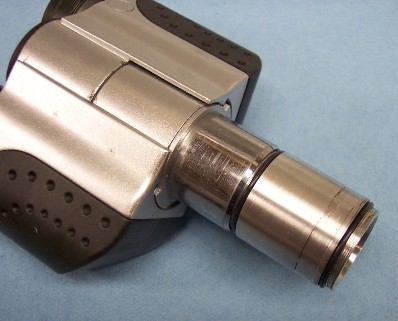
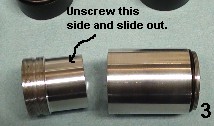
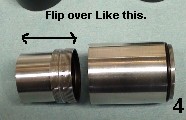
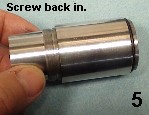
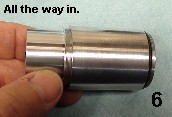
1.25x corrector for Baader, Burgess, WO, Stellarvue, Celestron, Orion, Moonfish, BC&F, Binomate and the like. Please let me know what Binoviewer you are going to use. $249 (SBW -1.25x) This is a simple 1.25x OCA It is a 3 pc unit and is for any telescope Dob or refractor 1.25" Diagonal friendly Instructions for corrector here
>>>>>LOOK>>>>> -----------------------------
1.25x Multi Magnification corrector for Baader, Burgess, WO, Stellarvue, Celestron, Orion, Moonfish, BC&F, Binomate and the like. Please let me know What Binoviewer you are going to use. (SBW-1235) This is the 4 pc unit and is for any telescope $279 1.25" Diagonal friendly 1.25x, 2.0x, 3.5x Instructions for this corrector
>>>>>LOOK>>>>> Please let me know What Binoviewer you are going to use.
=======
|
These low power correctors are guaranteed to focus in any scope both Dobs or Refractors.
Total Dob penetration 3 3/4" Instructions for corrector here
------------------------------------
This is a corrector below that gives 1.25x magnification with any of these short path binoviewers. See instructions for a bonus magnification. Right picture is with optional T2 nose.
Total Dob penetration 3 3/4" Instructions for this corrector
============================ . |
||||
|
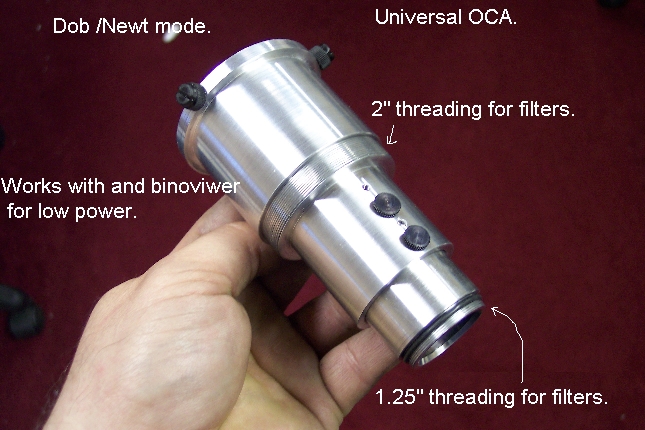
Universal Binoviewer MAX Light OCA's We are the pioneers of this design. These will focus any Binoviewer in any telescope. |
|||||
|
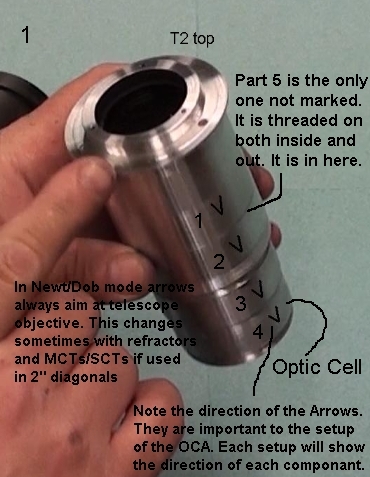
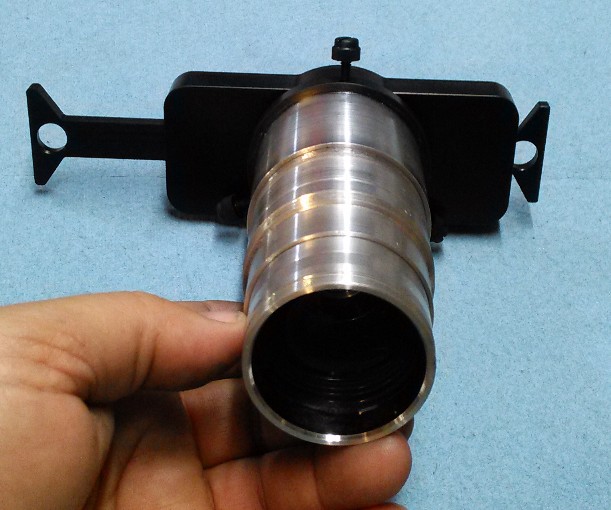
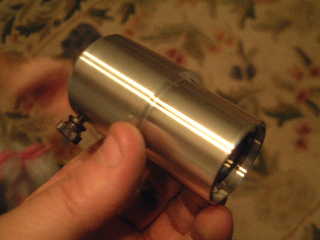
2" 1x and 1.3x Multi Magnification High Output OCA's For all Binoviewers New 38mm CA available. B) SERIES See 2" filter thread adaptor below for the (B) series OCA. (A) series OCA already threaded for 1.25" filters F2.8 Scopes and above. No back focus needed. These are Adjustable focus full compensations OCA's and x1 means Zero magnification is added to your eyepieces. Please let me know what Binoviewer you have and The attachment it has at the bottom EX: T-2. Also Click Here. Also Multi Mag adaptors below for all Binoviewers. Instructions for All OCA's Below. ======================= The OCA focus adapters below can come with a universal connection for all binoviewers or optimal T2 for the Baader Quick Connect. or TV binoviewer to replace the 1.25" nose piece. Please specify in your order so I can send the correct connection type. Standard A) SERIES Size OCA here (Large below these) A1)1.3x Two Piece for Newts & Refractors, $299. (2OCA13) for F5 scopes on up A2)1x Two Piece for Refractors, for F5 scopes on up $299. (2OCAx1) Actual mag is 0.93x A3)1,3x.MultiMag Two Piece for Newts & Refractors, $399. (2multiOCA132027) Mags 1.3x, 2.0x, 2.7x for F5 scopes on up .A4)1x MultiMag Two Piece for Newts & Refractors, $399. (2multiOCAx113) Mags-1x, 1.3x for F5 scopes on up .A5)1x MultiMag Two Piece for Newts & Refractors, $399. (2multiOCAx11520) Mags-1x, 1.5x, 2.0, for F5 scopes on up
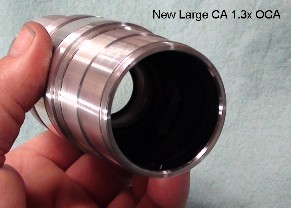
======================= New Large OCA here 38mm CA (B) SERIES 2" Filter adpator $30 Click here to see the (P)ower (M)ag (W)heel additions of these focus adaptors. See A1 and A2 in Ad #6 Click here B1) 1.3x Large 38mm CA OCA for Newts & Refractors, $399. (2OCA1.3x38) For F2.9 scopes on up. B1a) 1.15x Large 38mm CA OCA for Newts & Refractors, $399. (2OCA1.15x38) For F2.9 scopes on up. B2)1x Large 38mm CA OCA for All Refractors, $399. (2OCA1x38) For F2.9 scopes on up. B3)1.3x /x2 Large 38mm CA OCA for Newts & Refractors, $599. (2MultiOCAL1.320x38) For F2.9 scopes on up. B3)1.15x /x2 Large 38mm CA OCA for Newts & Refractors, $599. (2MultiOCAL1.1520x38) For F2.9 scopes on up. B4)1x / 1.3x Multimag Large 38mm CA OCA for Newts & Refractors, $599. (2MultiOCA1.3x38) For F2.9 scopes on up. B5)1x / 1.5x Large 38mm CA OCA for Newts & Refractors, $599. (2MultiOCAL1.15x38) For F2.9 scopes on up. B6)1x / 2.0x Large 38mm CA OCA for Newts & Refractors, $599. (2MultiOCAL120x38) For F2.9 scopes on up.
|
Will it work with your VERY fast Dob at 1.3x. Look at this Cloudynights discussion. > Click here.
No back focus needed.
OCA's Shown above in Newtonian mode.
Baader Left above can use the quick ring to mount the OCA on the bottom of the Baader binoviewer and used in Dob or other telescopes. The Baader MB and TV on the right can have the OCA screw into the bottom with threaded T2 top on the OCA(See picture on the far right. More below.
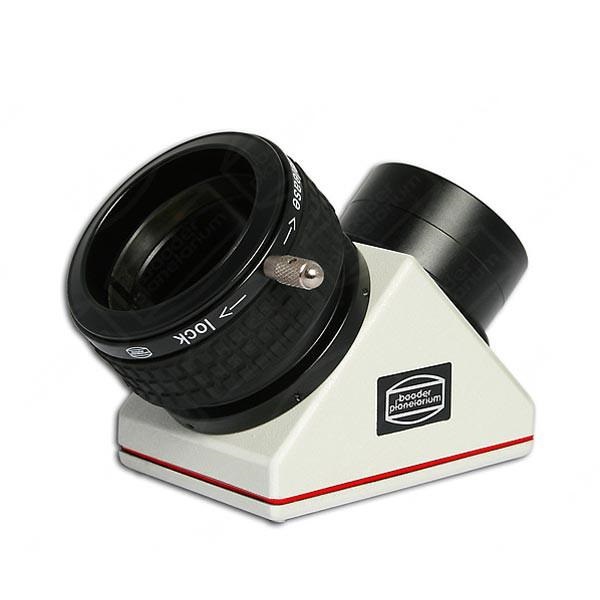
To use the OCA in refractors, the Diagonal must have an standard 2" eyepiece holder and the nose of the diagonal must have a 2" dia and standard 2" filter threads at the nose to hold a portion of the OCA. Baader Diagonals can be used but only in the configuration just specified. EX: Televue diagonals are good like the one above left. Baader above center is setup similar. The 1.25" nosepiece on the right is for Baader MB and TV with the universal OCA and other OCA I sell like in Ad #4. It has T2 threads at the top and Female 1.25" threads at the bottom. The TV above is using it with the universal OCA. No back focus needed. Not enough can be said about the above corrector. The magnification factor can be as low as .93x and is sharp to the edge of the field of view in a set of my 24mm Ultra Plus's or Panoptic 24mm's. If you own a refractor and a TV or Denk binoviewer or any other large Prism bino you will be blown away by the bright low magnification images. It use to be that binoviewing carried a higher magnification price. Now Siebert Optics has changed all that. Try this product for 60 days and if you are not completely satisfied return it for a full refund of the purchase price. This unit has been thoroughly tested in a number of different scopes including specifically TV scopes.
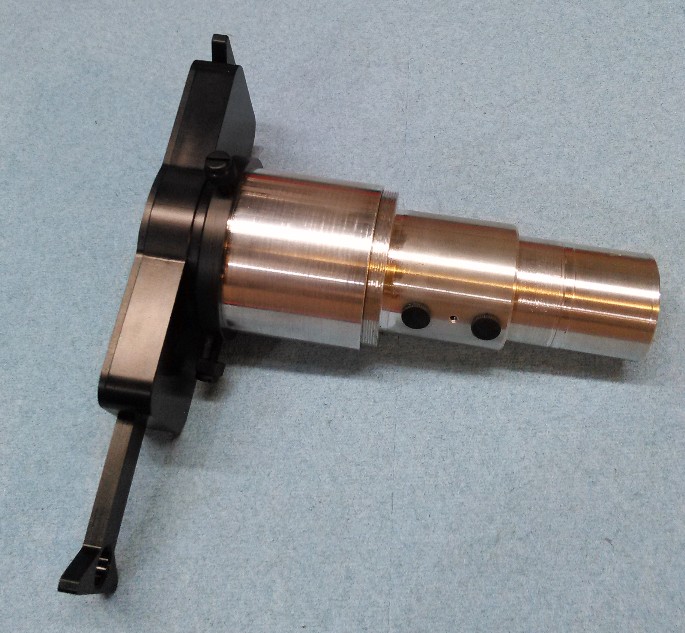
New Large 38mm CA OCA picture Below
|
||||
|
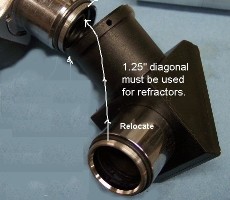
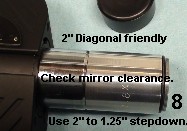
Low Profile and 2" Diagonal friendly Please let me know What Binoviewer you are going to use. Only extends 1.75" below the nose of the binoviewer, similar to the Televue x2 corrector.
. |
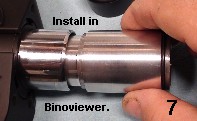
This corrector has standard filter threads and screws directly into the bottom of your binoviewer's focuser shaft nose. the 1.8x model is incredibly short and completely parfocal. The 1.5x is the same but had a small 5mm intravel requirment. Also they are diagonal friendly like the TV unit.(but is a little shorter.) This means that it does not have to come in 2 pieces, but can be simply be screwed into the nose of your binoviewer and then placed in the diagonal of the scope. Most 2" diagonals will be deep enough for it to go in completely. For those that can't a depth adjustment ring is included which allows you to adjust how deep it goes into your diagonal. 1.25" diagonals usually have their own stop before the mirror or prism. But this is not all.
Great for small format binoviewers.. First it improves light throughput dramatically through the lower 22mm aperture and channels the light to the eyepieces in a very fine beam. Unlike when using a binoviewer in an SCT where the clear aperture at the bottom of the binoviewer is all important for light throughput, refractors and dobs require an optical path corrector. So a similar barlow/optical corrector unit must be used anyway. This is where this unit comes in. |
||||
|
Ad#5
3 in 1 1.25" SCT'/MCT Multi-mag Universal OCA for All Binoviewers Please let me know What Binoviewer you are going to use. Also Low Profile and 2" Diagonal friendly This will give you 4 different mags.---0.6x/1.2x/2.0x/3.0x All with one OCA. 1.25" 4 power model, $219 (OCAmultiSCT4) 2" 4 power model, $269 (OCA2multiSCT4) ----------------------------------------------- |
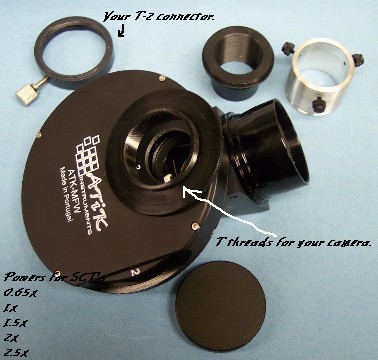
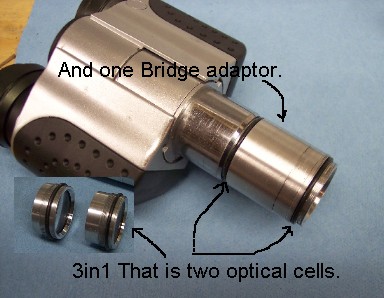 3 power SCT OCA shown. An all inclusive optical corrector has been developed for SCT's. It covers 4 different magnifications as follows: -0.6x; 1.2x 2x and 3.0x. All of these combinations are possible with this simple corrector. Super lightweight and compact. The corrector takes advantage of the SCT's ability to focus which allow the unit to be super low profile. All aluminum construction. All optics have been ray traced for flawless edge performance. The -0.6 is achieved using the focal reduction cell (#1). 3x is achieved using element #2; then last using #1 first then #2 together with a connecting bridge, you will achieve 2x magnification. 1.2x is the binoviewer with no optics in place. What does this
mean? A tremendous savings in eyepiece pairs. Buy one premium set
of eyepieces and every magnification is covered. Even relatively
inexpensive eyepieces are augmented with the use of these
correctors. . Because these corrector cells are threaded for
standard filters the other applications are endless. |
||||
|
|||||
|
|
|||||
|
1.25" or 2" 0.6x FOCAL LENGTH REDUCER FOR ALL Binoviewers.
(Illustrations to right) 1.25" Barlow type for all binos $129 (looks similar to shorty type barlow. (FLR125Bar) 1.25" Filter cell type for All binos $119 (Works similar to a filter cell.) (FLR125cel)
2" models below
2" Cell type with 40mm optics
$179
(Works similar to a filter cell.)(FLR2cel)
2" 1.25" Barlow type with 40mm
optics $179
(Works similar to a tall 1.25" to 2" stepdown)
See last picture (FLR2holder) 2" Barlow type with 40mm optics $199 (Works similar to a 2" barlow.)(FLR2barlow)
|
GALAXY VIEWER BINOVIEWER FOCAL LENGTH REDUCER FOR SCT'S/MCT'S
Have a wider True field with the same eyepieces. How it works. This a focal length reducer
for your SCT and binoviewers. People need to be warned about
these. They can work very well if you don't overdo the focal
length reduction. That is why this unit is limited to a 40%
reduction which means that if your scope is operating at between f/10 and
f/12 you will get a roughly 40% reduction to between f/6-F/7. This
may vary slightly depending on a few things including your binoviewer. This is
about the maximum that can reasonably be done for two important
reasons. 1. Focusing. This unit will focus in
virtually any SCT 8" and up with some focusing to spare, 2.
By driving down your focal length below f/6 you may introduce so very serious
optical irregularities. Call for more information about this. Do
not expect an f/10 system to be reduced to f/5 or under f/5 and perform halfway decent.
These focal length reducers will maintain excellent image quality and
color correction while reducing your scopes magnification. You
can use a set of 24mm SWA without apparent vignetting unlike other models which limit you
to more powerful types of eyepieces.
2.
|
||||
|
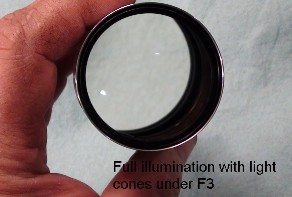
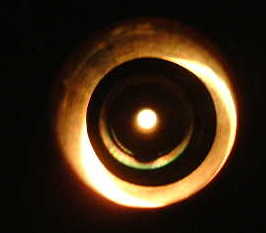
Design benefits of the Siebert Optics OCA's: This is the way the design has changed and why. As long as this unit is kept at 3.5" or shorter the entire cone of light easily makes it through the lower optic with a diameter of 25mm-26mm. Even the Televue x2 Corrector is roughly 3" from the bottom of the binoviewer and only has a clear aperture of 17mm's. But because of the length of the unit the entire cone of light makes it through that aperture and the unit remains parfocal. My personal opinion is there are no present x2 correctors that has better light throughput or superior image quality to the Televue x2. But anyone looking at the unit will notice that the upper element is substantially larger than the lower one and not the other way around. The reason for this is as the light passes through the lower negative element a diverging lighjt cone is created which spreads out , but because of its relatively close proximity to the upper element and the fact that the upper element is larger, very little if any light is lost. The result is a fantastic transmission up to the eyepiece. If anyone needs proof that a lower negative element deverges light, simply plug a barlow into your scope from f/4-f/10 and you will notice the inside of the barlow tube is illuminated from just above the element all the way up. Here is a visual illustration to show what this looks like.
Convergent beam +150mm divergent beam -150mm This was the same case in an optical system from f/4 to f/8. On the left a hollow reflective tube was used the same as on the right. The whole basis of the Televue powermate series is that the upper positive element is a pupil correcting element that reconverges the beam and eliminates the negative aspects of the negative elements used in standard barlows. So the problems caused by standard barlows are caused by a diverging element (ie. higher eye relief, vignetting and some light loss) this is corrected in the powermate. Some of the larger 2" x2 barlows have a very huge baffle about 1/2 way up to the eyepiece and restricts the aperture roughly down to 30mm's. These barlows have a negative element of almost 40mm's in diameter. What this tells you is that even though the lower element is 40mm's the manufacturer knows you are not getting the full benefit of the lower diameter element. So what needs to be done is similar to what the clever engineers down at Televue have done and that is fine tune the optical system using a large enough lower element to make sure the entire light cone makes it through. The key is to enlarge the upper element so that as much of the diverging light as possible is retransmitted back into a convergent beam towards the eyepieces. Look at the pictures below.
(click on pictures below to enlarge)
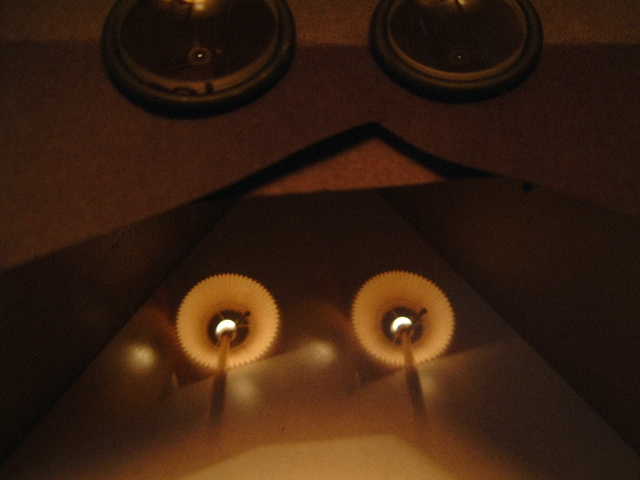
The illustrations above shows the light throughput differences between a 30mm positive element and a 25mm positive element. Theoretically on paper this represents a 44% increase in light. What does your eyes tell you? The left side is substantially brighter given they have the same illumination source. This is not a new concept. Objective lenses are made larger for increased brightness. Because the negative element creates a divergent beam the larger 30mm upper element is imperative to good light throughput. In my tests comparing the 25mm and 30mm elements the 30mm element reduced vignetting tremendously and gave much better illumination. If a 25mm element was sufficient for transmitting the necessary light doubtful that the vignetting would have been so drastically reduced by the 30mm element. Also a 30mm element is the max size necessary for most binoviewers on the market today since none have a larger prism clear aperture of more than 30mm's. So 25mm's is not enough and 31mm is too much. This is the principal that our new OCA designs are based on. Instead of having an extremely large lower element 35mm's or bigger, which in reality is only a psychological advantage. Any benefits of a larger lower element are quickly wasted due to the distance to the second element and the relatively small size of that second element. In this case the whole unit is shortened so that the optics are spaced much closer. The lower element has a clear aperture of roughly 25mm's. which is at least 2-3 mm's larger than the cone of light at f/4.5. The whole unit is parfocal so that any advantages of the short unit are not wasted by having to rack your focuser all the way in. The upper element receives and transmits 44% more of the light reaching it over a 25mm element. The result is a superbly balanced optimal system that works every bit as good in the 1.25" size as in a 2" size. Hence why in the units below the 2" is designed exactly the same way as the 1.25' units only in larger diameters. Understandably other companies will have their own take and opinions on their own optical designs.
See New video instructions below.
Older instructions below
|
|||||
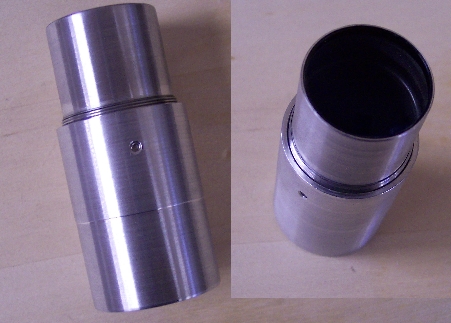
 B) SERIES. More
pictures below
B) SERIES. More
pictures below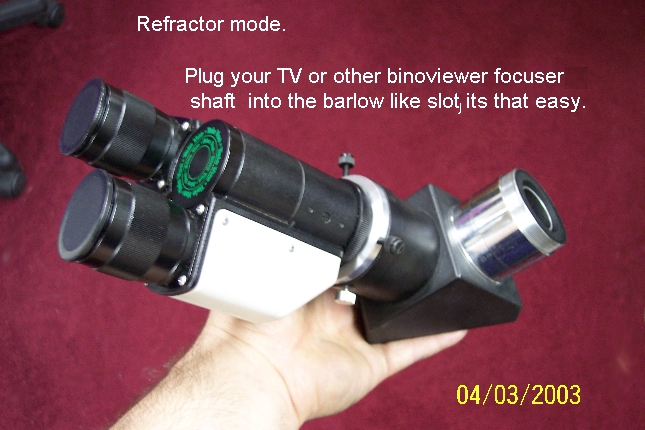





|
All listed products come with a 30-day money-back guarantee* unless otherwise stated. Specialty order items are not refundable (items made specifically for you). We
welcome |
We accept Visa, Mastercard, Discover American Express. U.S. Money Orders, and Personal Checks (held 10 working days for clearing). Online payments may be made securely through
|

